
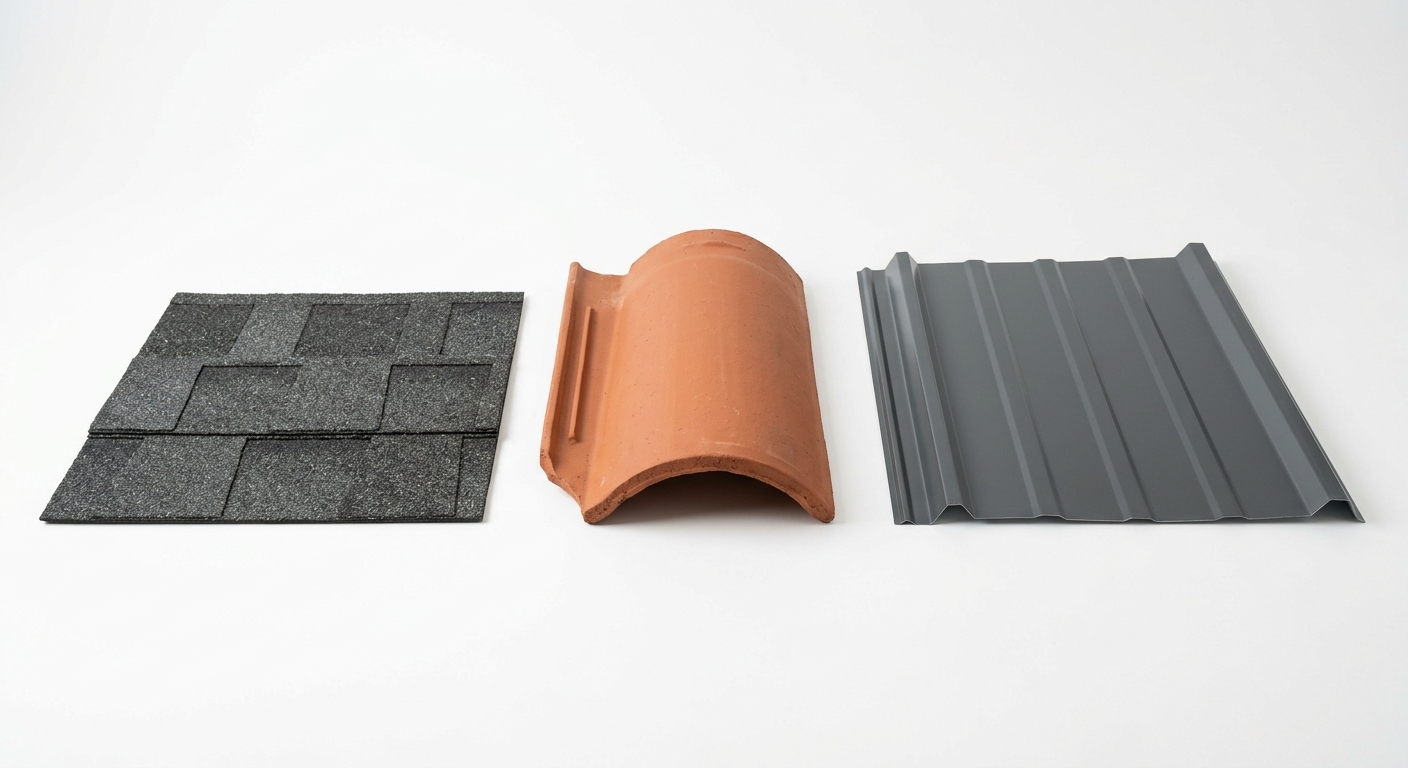
Replacing a roof is one of the biggest home investments you'll make. In Tampa Bay, the decision isn't just about cost — it's about wind resistance, energy efficiency, and how long the material will survive Florida's brutal sun and hurricane seasons.
Asphalt Shingle: The Standard Choice
Architectural (dimensional) shingles are the most common roof material in Tampa Bay. They're cost-effective, widely available, and rated for 110-130 mph winds when properly installed.
- Lifespan in Tampa Bay: 15-20 years (Florida sun reduces the 25-30 year rating)
- Wind rating: 110-130 mph (architectural); 60-80 mph (3-tab — don't use in Florida)
- Cost: $6,000-$14,000 for a typical home
- Energy efficiency: Moderate. Light-colored "cool" shingles reflect more heat and can reduce cooling costs by 10-15%.
Concrete Tile: Durability and Style
Concrete tile is common in Tampa Bay's upscale and older neighborhoods. It's heavy, durable, and handles Florida's weather well.
- Lifespan: 30-50 years (the tiles themselves; underlayment needs replacement at 20-25 years)
- Wind rating: 110-150 mph depending on installation method
- Cost: $12,000-$22,000
- Energy efficiency: Good. The air gap between tiles and decking creates a thermal break.
- Weight consideration: Concrete tile weighs 900-1,200 lbs per square. Your roof structure must be rated for it — not all homes can support tile without structural reinforcement.
Clay Tile: Premium Aesthetic
Clay tile offers the distinctive terracotta look common in Mediterranean and Spanish architecture.
- Lifespan: 50-100 years (tiles); underlayment at 20-25 years
- Wind rating: 110-150 mph
- Cost: $18,000-$30,000+
- Energy efficiency: Excellent. Same thermal break as concrete, plus natural clay reflects heat.
Standing Seam Metal: The Hurricane Champion
Metal roofing is the fastest-growing segment in Tampa Bay, and for good reason — it handles hurricane winds better than any other common material.
- Lifespan: 40-70 years
- Wind rating: 140-160 mph (standing seam); 110-130 mph (corrugated/screw-down)
- Cost: $18,000-$28,000 (standing seam); $12,000-$20,000 (corrugated)
- Energy efficiency: Excellent. Metal roofs reflect solar radiation and can reduce cooling costs by 15-25%.
- Lightning myth: Metal roofs do NOT attract lightning. They dissipate it safely and are less likely to catch fire than asphalt.
Corrugated Metal: Budget Metal Option
Screw-down corrugated metal is less expensive than standing seam but has exposed fasteners that need maintenance every 10-15 years.
- Lifespan: 30-45 years
- Wind rating: 110-130 mph
- Cost: $12,000-$20,000
- Maintenance: Fastener gaskets degrade and need replacement. Leaks develop at fastener points over time.
What to Choose for Tampa Bay
Best value: Architectural shingle with a high wind rating (130 mph). Most cost-effective, meets insurance requirements, widely available.
Best longevity: Standing seam metal. Lasts 40-70 years, handles 140+ mph winds, best energy efficiency. Higher upfront cost but lowest lifetime cost.
Best for existing tile homes: Replace with tile. The roof structure is already rated for the weight, and tile maintains the home's architectural character.
Best for coastal homes: Standing seam metal or tile. Both handle salt air corrosion better than asphalt, and both have the wind ratings needed for coastal exposure.
The Underlayment Matters as Much as the Surface
Whatever material you choose, the underlayment (the waterproof barrier beneath the surface) is critical in Florida. Synthetic underlayment (peel-and-stick or high-strength felt) costs 20-30% more than standard felt but provides dramatically better waterproofing — important when a hurricane strips surface material and exposes the underlayment directly to rain.