
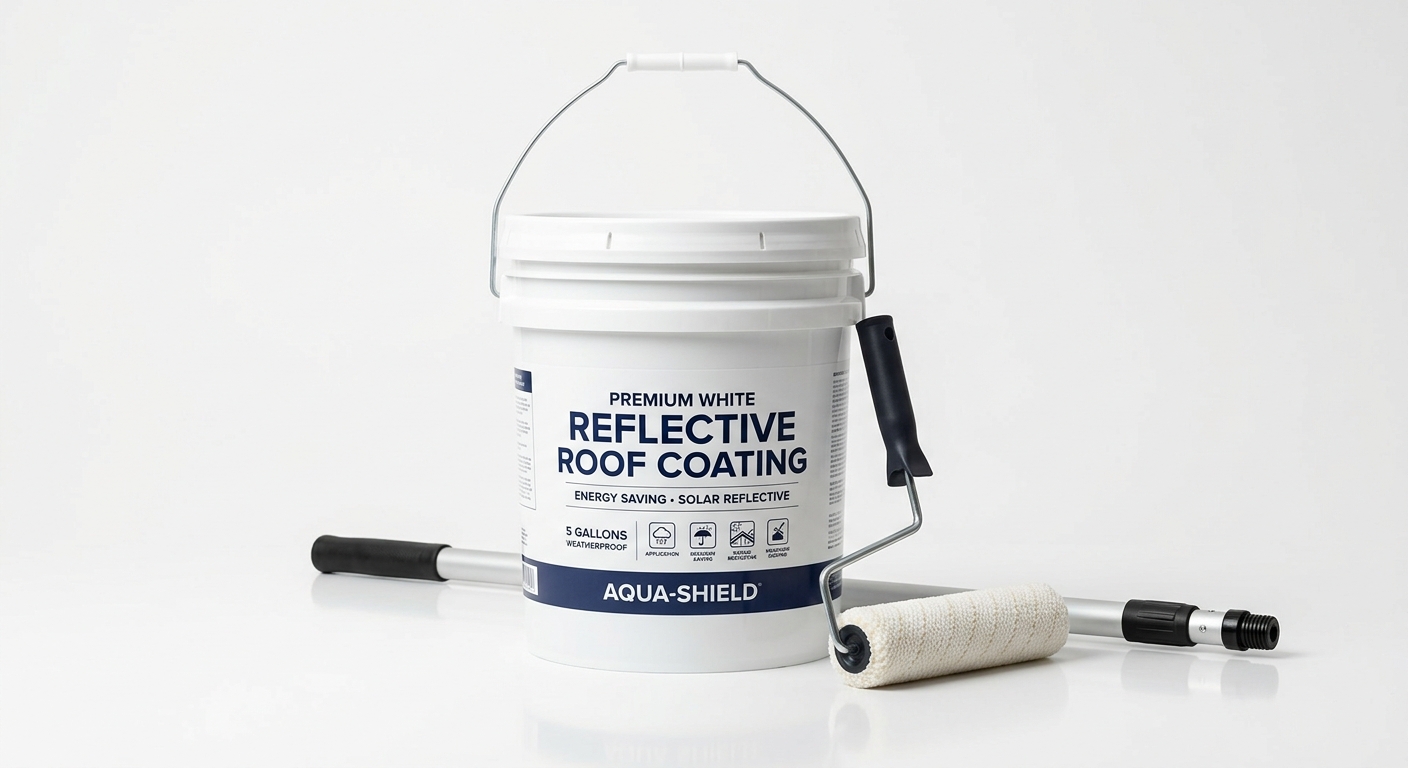
A reflective roof coating can reduce your roof surface temperature by 30-50°F in Tampa Bay's summer sun. That temperature drop translates directly into lower cooling costs and a longer-lasting roof. But not every roof is a good candidate for coating, and not every coating lives up to the marketing.
How Cool Roof Coatings Work
Dark roof surfaces absorb solar radiation and convert it to heat. In Tampa Bay's summer, a dark asphalt shingle roof can reach 160°F. A reflective coating bounces that solar radiation back into the atmosphere, keeping the roof surface closer to 90-110°F. The cooler roof means less heat transferring into your attic, which means your AC works less to maintain indoor temperature.
Types of Roof Coatings
Acrylic ($2-$4 per sq ft): The most common and cost-effective. Good UV resistance, easy to apply, and suitable for most flat and low-slope roofs. Lifespan: 5-10 years before recoating.
Silicone ($3-$5 per sq ft): Better water resistance than acrylic — stands up to Tampa Bay's afternoon thunderstorms without re-emulsifying. Best for roofs with ponding water issues. Lifespan: 10-15 years.
Polyurethane ($4-$7 per sq ft): Highest durability and impact resistance. Best for roofs that take abuse (hail, foot traffic). Lifespan: 10-20 years.
Asphalt aluminum ($2-$4 per sq ft): Reflective aluminum pigment in an asphalt base. Used primarily on built-up and modified bitumen roofs.
Which Roofs Can Be Coated?
- Flat and low-slope roofs (modified bitumen, TPO, EPDM, built-up): Excellent candidates. These roofs have no aesthetic surface to preserve, and coatings dramatically extend their life.
- Metal roofs: Good candidates, especially corrugated/screw-down metal. Coating protects against corrosion and improves energy efficiency.
- Asphalt shingle roofs: Technically possible but controversial. Many coating manufacturers don't warranty their product over shingles, and coatings can trap moisture that damages the shingles beneath. Check with a roofing professional before coating shingles.
- Tile roofs: Not candidates for coating. The tiles themselves don't benefit, and coating traps moisture under the tiles.
Energy Savings in Tampa Bay
A reflective coating on a flat or low-slope roof can reduce cooling costs by 15-25% in Tampa Bay's climate. For a home spending $1,500-$2,000/year on cooling, that's $225-$500/year in savings. A coating that costs $3,000-$5,000 pays for itself in 6-15 years, while also extending the roof's life by 5-10 years.
The Application Process
- Cleaning: The roof must be thoroughly cleaned and dried. Any dirt, debris, or moisture will compromise adhesion.
- Repairs: Existing damage (cracks, blisters, loose seams) must be repaired before coating.
- Primer (if required by the coating manufacturer): Ensures proper adhesion.
- Coating application: Usually sprayed or rolled in 2-3 coats for proper thickness.
- Cure time: 24-48 hours before the roof can handle rain.
Professional application is strongly recommended. DIY coating jobs frequently fail from improper surface preparation or uneven application.
Cost vs. Benefit
For flat and low-slope roofs in Tampa Bay, roof coating is one of the highest-ROI home improvements available. For pitched shingle or tile roofs, the benefit is marginal and the risk of trapping moisture makes it a less clear-cut decision.